On June 17, 2025, VMware released Cloud Foundation 9.0, marking a significant evolution in private cloud solutions. This version is designed to offer the flexibility and speed of public cloud platforms while keeping the security and control of on-premise environments.
Why This Release Matters
Today, businesses no longer want to choose between the agility of the cloud and the reliability of on-premises infrastructure. With growing data volumes, strict compliance needs, and rising cloud costs, many organizations are looking for a hybrid solution. VMware Cloud Foundation 9.0 delivers exactly that.
What Makes It a “Next-Gen” Private Cloud?
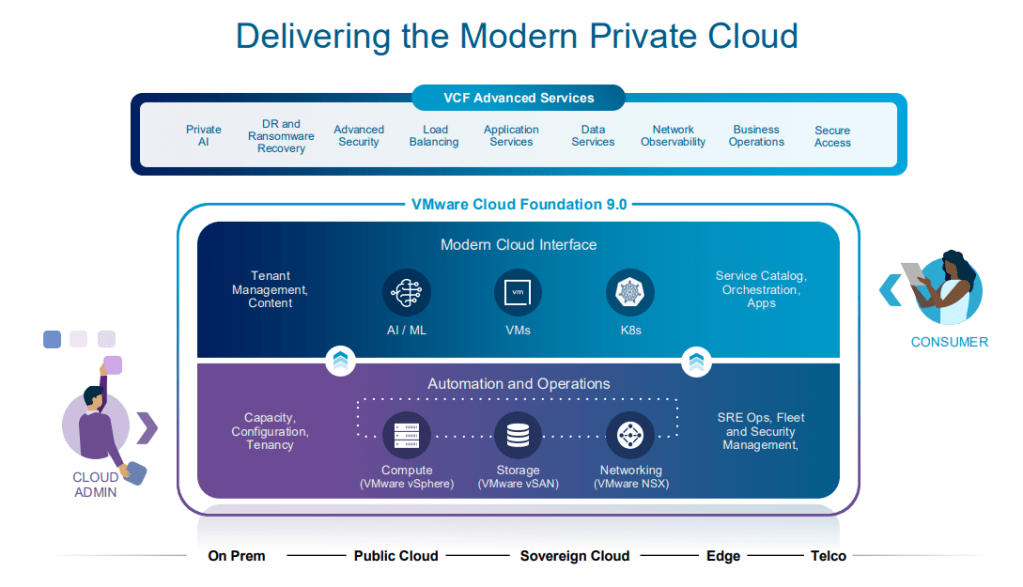
- Unified Infrastructure: Compute, storage, and networking are all managed as software-defined resources.
- Developer-Friendly: APIs replace traditional ticket-based provisioning, speeding up development.
- Support for All Workloads: You can run virtual machines, containers, and AI applications on the same platform.
- Consistent Policies: Enforce security and management policies across all locations—data centers, edge, or sovereign cloud.
- Built-in Governance: Security and compliance features are integrated from the ground up.
A Shift in Architecture
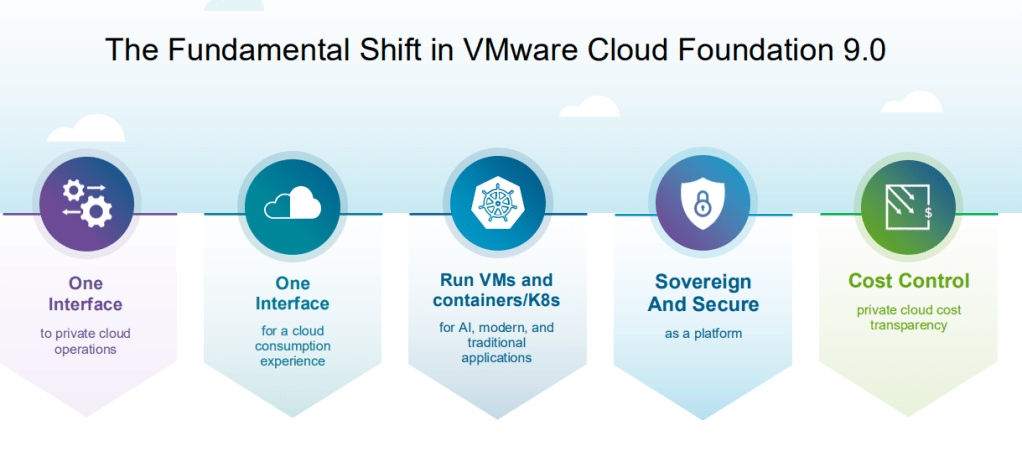
VCF 9.0 focuses heavily on unified operations. That means one set of APIs, one management experience, and one policy model. This reduces complexity and makes it easier for both system admins and developers to work faster and with fewer errors.
Key Improvements:
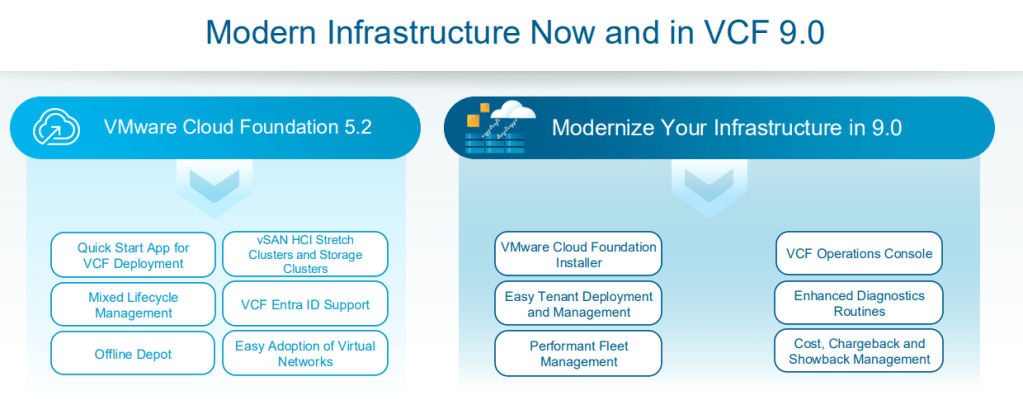
- A centralized operations console to monitor health, updates, and compliance.
- APIs and templates built for Terraform, REST, and automation workflows.
- Support for hybrid workloads, including VMs, Kubernetes, and GitOps pipelines like Argo CD.
- Compliance and sovereignty tools, including geo-fencing and automated certificate rotation.
- Built-in cost tracking for financial visibility across teams and tenants.
Core Platform Enhancements
Here are some major technical upgrades in version 9.0:
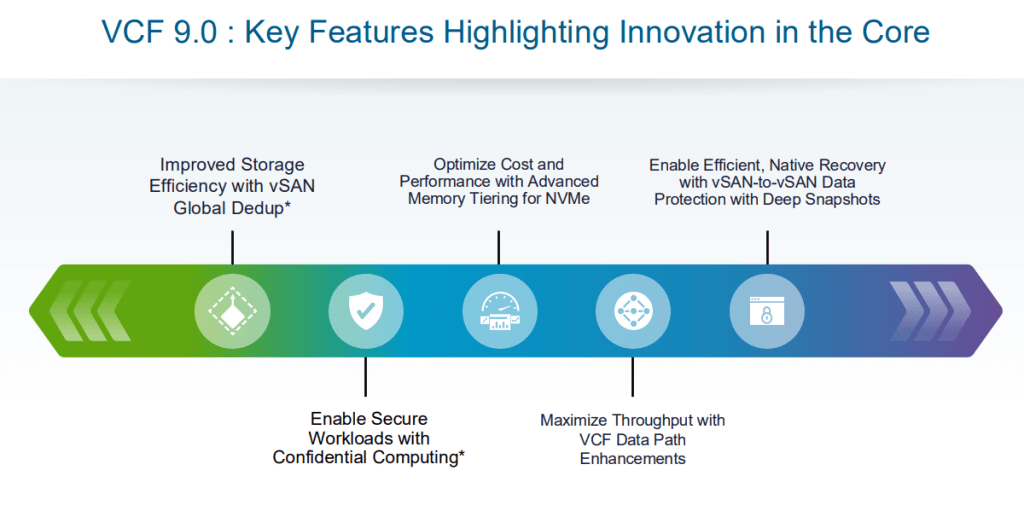
1. NVMe Memory Tiering
VCF now uses NVMe storage to expand memory capacity beyond DRAM. This is ideal for memory-intensive apps like analytics, Java, and AI, without needing expensive RAM upgrades.
2. Global vSAN Deduplication
Duplicate data across different clusters is automatically removed, saving storage and improving performance—especially in large-scale environments.
3. Faster Data Paths
Improvements to the VMware kernel and support for DPU offloading reduce network latency. This is especially helpful for high-speed apps and microservices.
Features That Make a Difference
Modern Infrastructure Tools
- Operations Console: All your system health, patching, and certificate management in one place.
- Zero-Touch Installer: Set up the full stack in hours instead of days.
- AI-based Monitoring: Proactively identifies and flags potential issues.
- Cost Management Tools: Helps track spending and plan budgets by team or project.
Unified Developer Experience
- One API for everything: Provision VMs, containers, or environments using a consistent set of tools.
- Self-service infrastructure: Developers can spin up workloads using Terraform or GitOps.
- Easy Kubernetes setups: Quickly launch clusters and app environments using predefined templates.
Enterprise-Grade Security & Compliance
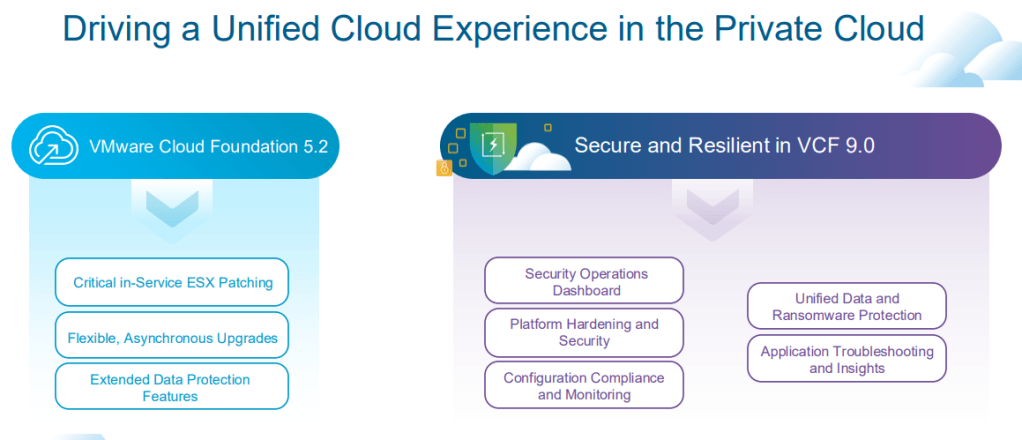
- Security Dashboard: Get a full overview of your security posture and vulnerabilities.
- Automated Compliance Checks: Stay aligned with standards like CIS and NIST.
- Built-in Identity & Certificate Management: No more manual updates or configuration errors.
Final Thoughts
VMware Cloud Foundation 9.0 is a strong step toward a more automated, efficient, and secure private cloud. It supports modern applications, offers better cost control, and simplifies management—making it easier than ever to run your workloads where you want, how you want.

 vmcloud.pl
Leave a comment